book design
Between Literature and Nature: The Poetics of Time
Client
Services
Platform

The Project
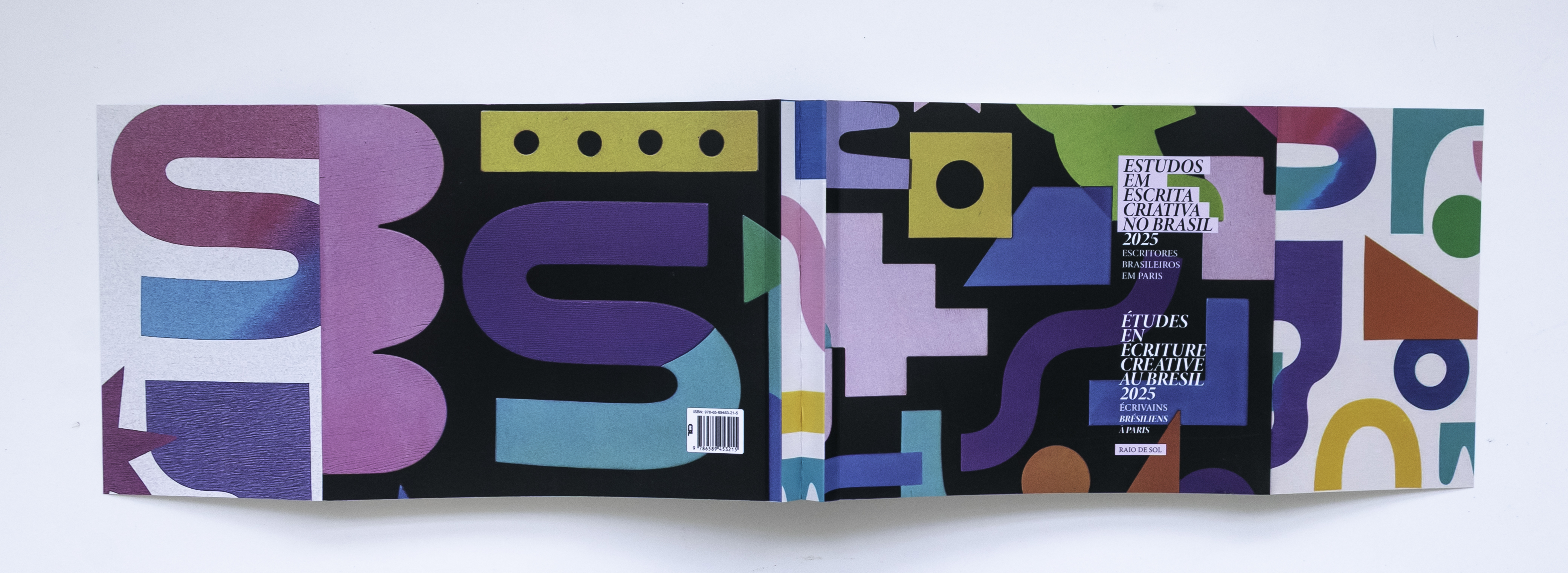
The collection celebrates the 50th birthday of writer and professor Patrícia Tenório, bringing together five volumes — 7 por 11, 12 horas, 13, 14, and 15. Since 2004, the author has published poetry, novels, and short stories, with eleven books and several literary awards in her career.
Just as the collection marks the author’s time, the graphic project was shaped by the cycles of time: the time required by painting techniques, the time of natural leaves, and their own transformations.
The purpose was to align the idea of celebrating a writing — both reissued and unpublished — with the cycle of leaves from a tree that is part of Recife’s everyday landscape.The graphic concept revolved around “time” — the passage that redefines us. To bring the city of Recife into the project, I chose the cycle of the castanhola tree, a recurring presence in Parque Treze de Maio, a central space in the city’s daily life designed by Burle Marx. This tree, also known as the Indian almond (Terminalia catappa), carries many names and meanings, much like the multiplicity of voices present in Patrícia’s work.
The leaves themselves became the basis of the visual language: collected, dried, and later painted, they were used as stamps throughout the volumes. The result is a geography of time and cycles, where design, nature, and literature meet.
This project was recognized with the Brasil Design Award 2018 in the Editorial Design category, reinforcing its relevance as both a literary and visual work.



Geometries of Creative Writing
Client
Services
Platform
The Project
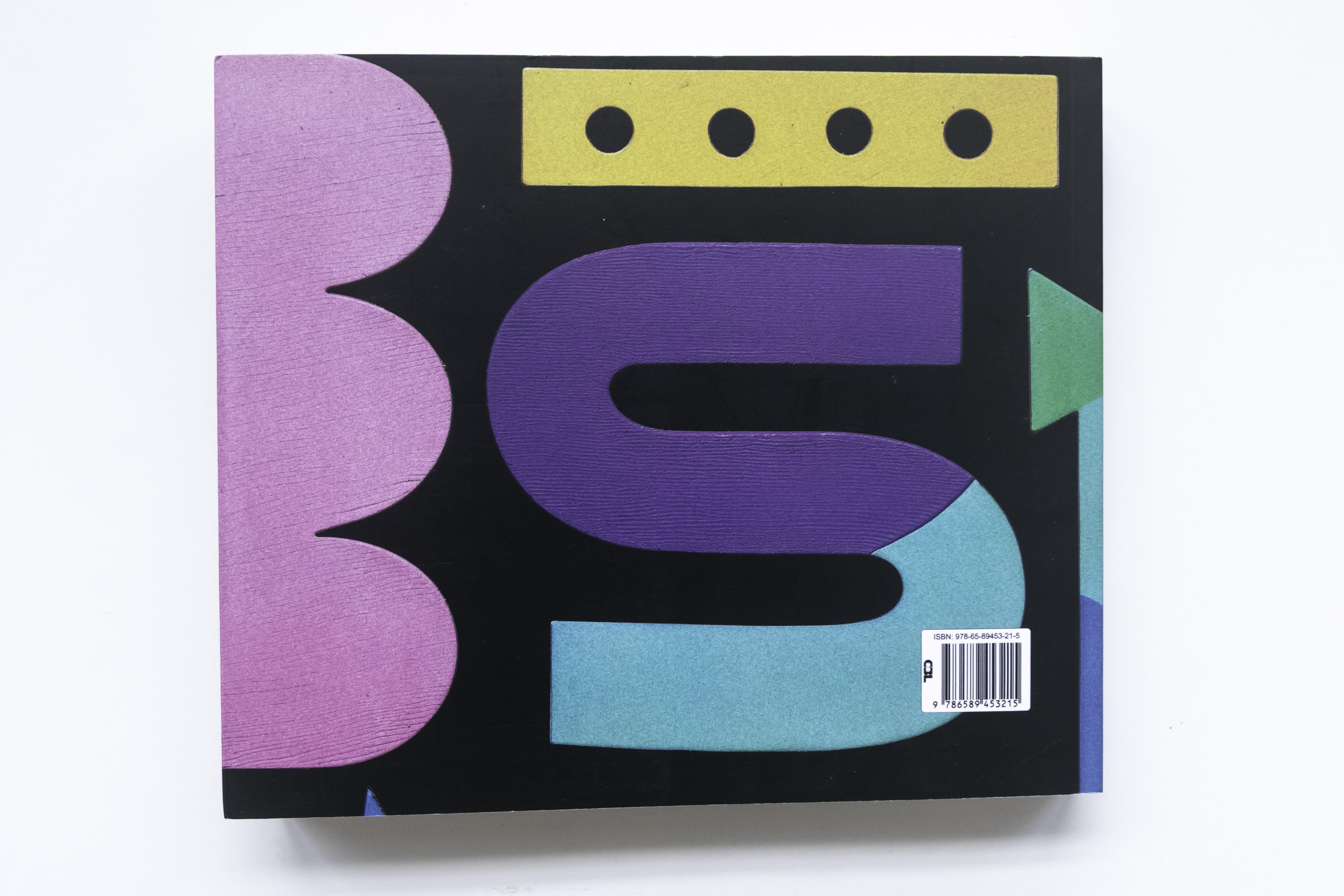
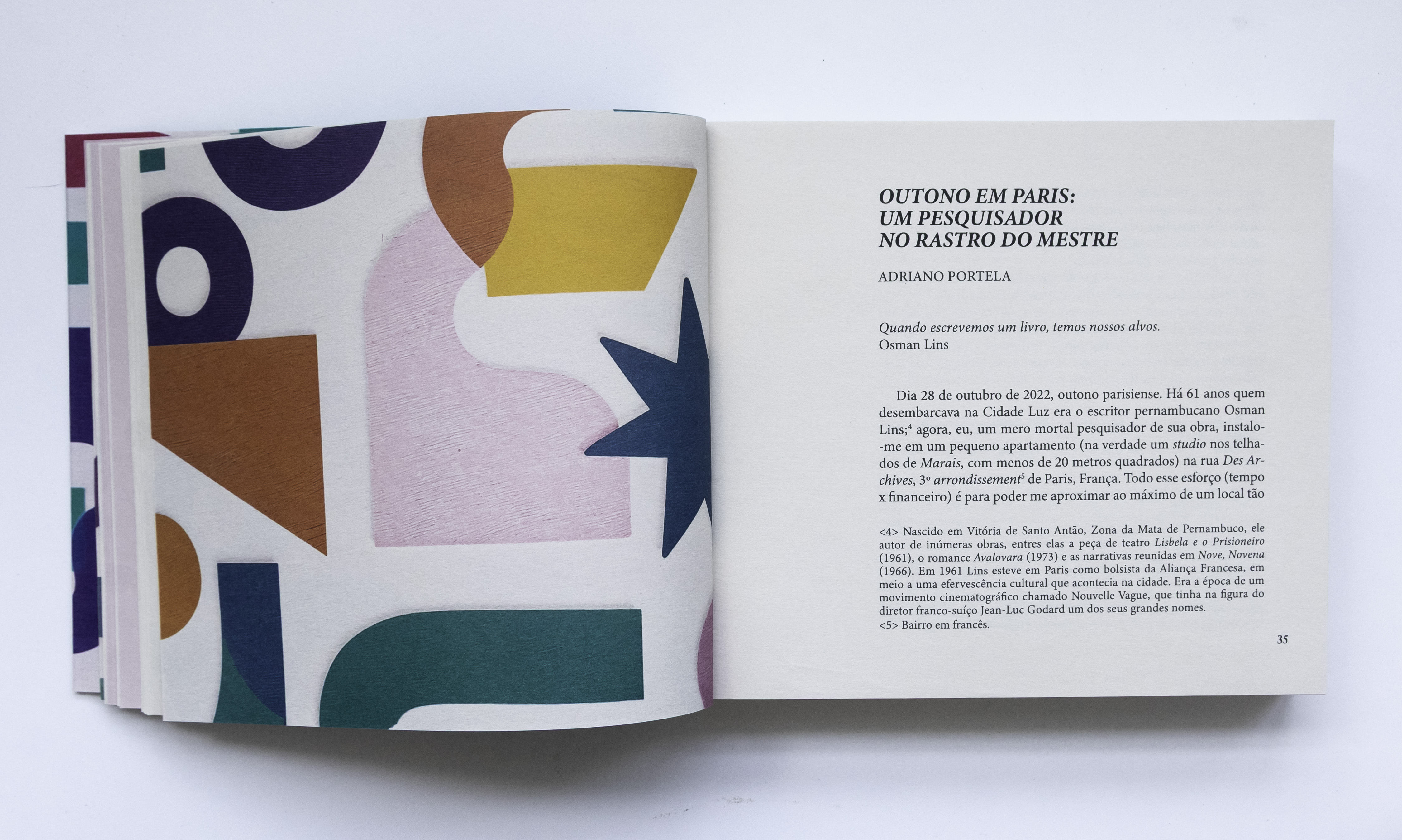
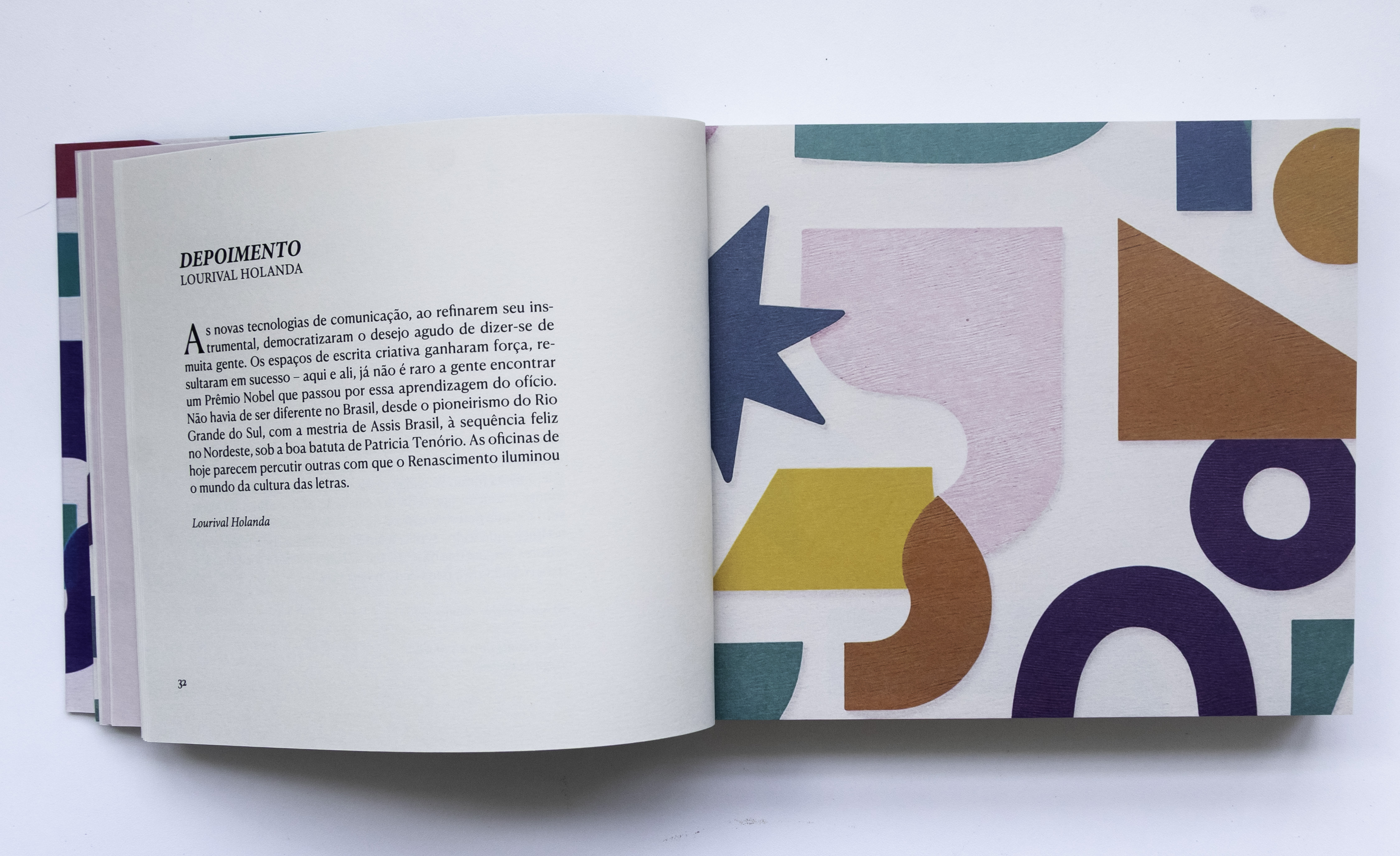
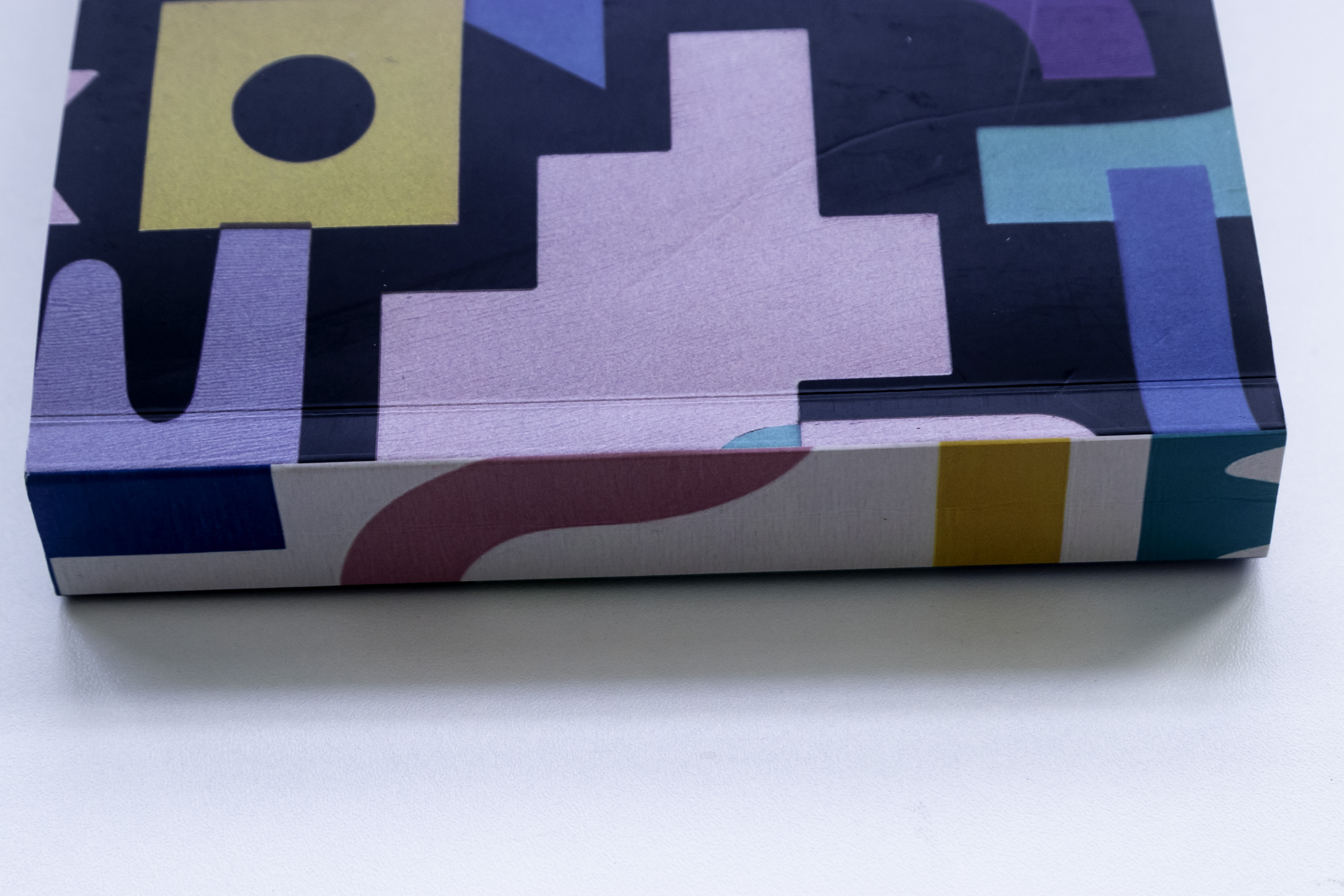
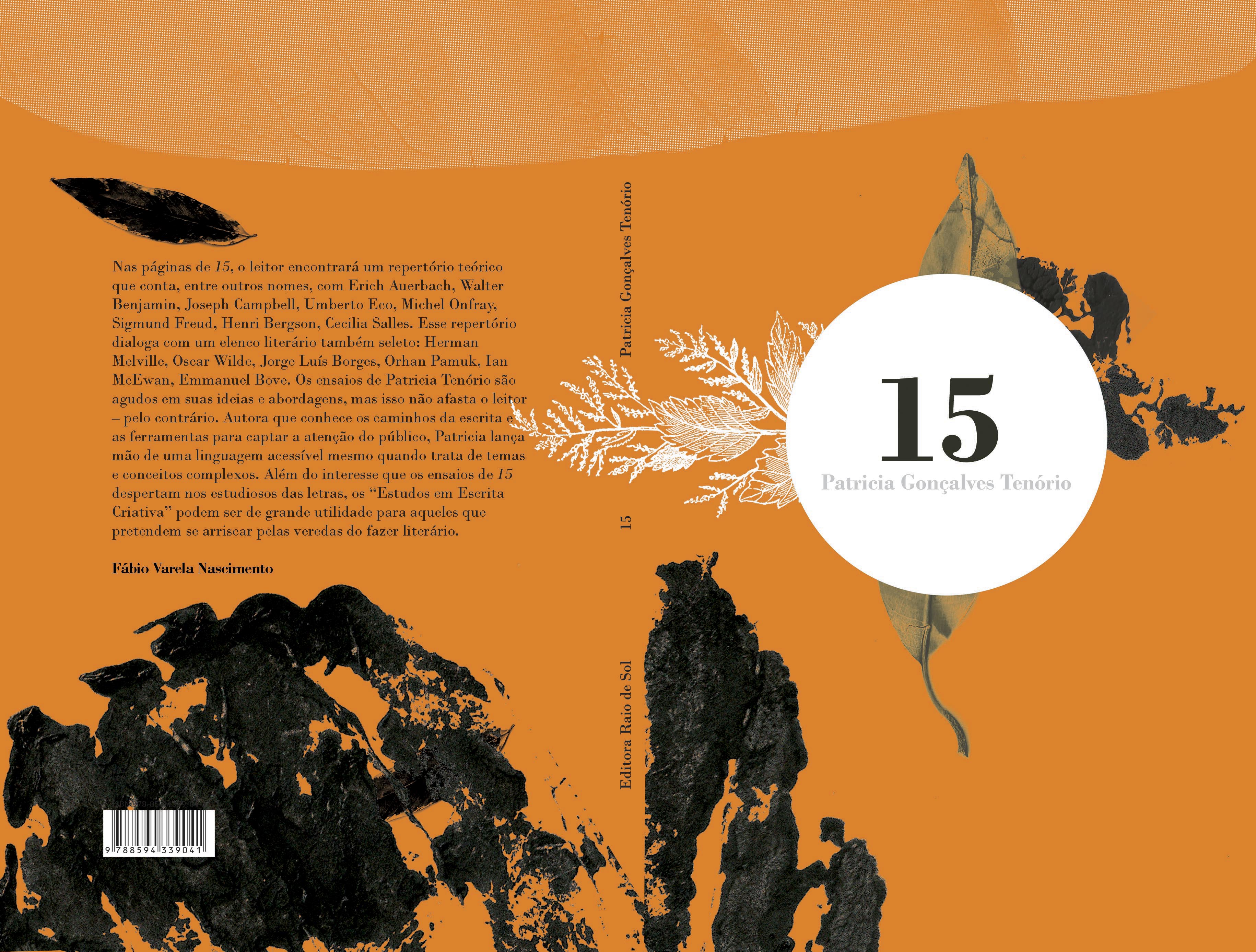
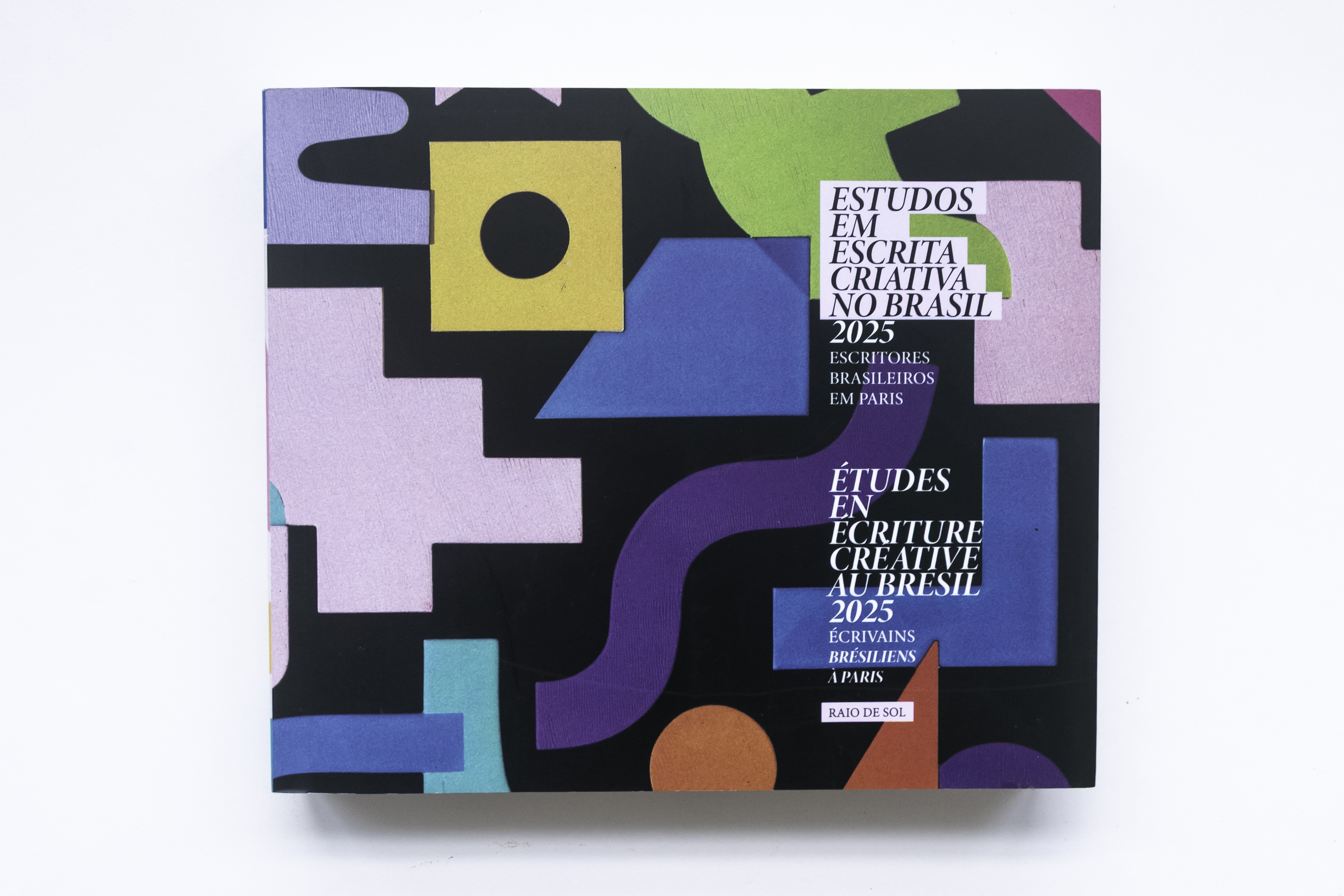
The graphic design of this bilingual anthology is based on free-form geometries, overlapping elements, and cut-out shapes that reflect the open and experimental nature of the creative process. Rather than following a rigid structure, the shapes converge, extend across the pages, and establish shifting relationships between color, scale, and space.
The visual language combines geometric and organic elements in a vibrant color palette, creating contrasts and variations throughout the book. Textures applied to the shapes add a handcrafted dimension to the compositions, reinforcing the idea of writing as a process shaped by experimentation, combinations, unexpected turns, and discoveries.At the beginning of each text, full-page illustrations act as visual pauses between the anthology’s different voices. Elsewhere, fragments of these geometries appear along the margins and within the composition, creating continuity and rhythm across the book’s 458 pages. The visual language developed for the book was extended into a broader communication system, including posters, invitations, and motion design pieces created for its launch events. By adapting the same geometric forms, textures, and color palette across print and digital formats, the project maintained a consistent and recognizable identity across different applications.
The main editorial challenge was to organize an extensive bilingual publication featuring multiple authors while preserving its diversity and maintaining visual cohesion. The typographic hierarchy and page layout were designed to ensure clarity and a fluid reading experience, while the system of shapes and colors gives the publication a distinctive identity.
The anthology brings together 20 texts by instructors from the Estudos em Escrita Criativa Social project, an initiative based in Recife that provides free education in literature and creative writing, particularly for people facing socioeconomic vulnerability.The texts explore the lives and work of writers, especially Brazilian authors, who lived in Paris and produced part of their work there, including Oswald de Andrade, Jorge Amado, Nélida Piñon, and Lygia Fagundes Telles. The publication examines how their homes, everyday surroundings, and lived experiences influenced their literary production.Released in 2025 as part of the official Brazil–France Season, celebrating the Year of Brazil in France and the Year of France in Brazil, the book was presented at the Librairie Portugaise & Brésilienne in Paris and at Bibliomaison in Rio de Janeiro, with the participation of several contributing authors.